
Discover tulsi cough syrup, its traditional uses, ingredients, and potential benefits.
Additionally, note important precautions.
Learn how to choose and use herbal cough syrups responsibly.
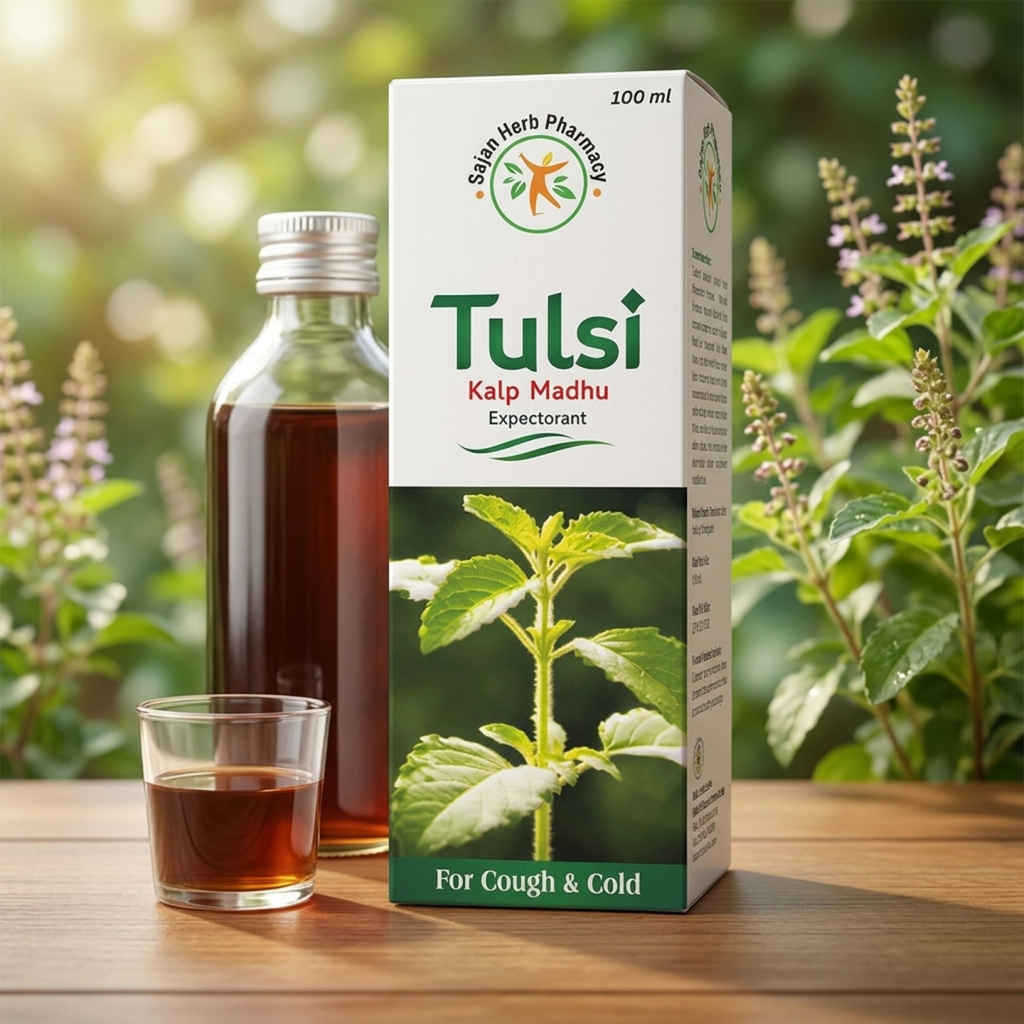
1. Introduction to Tulsi Cough Syrup
Tulsi, also known as Holy Basil, holds a special place in Indian culture and traditional wellness practices. For generations, Indian households have used Tulsi leaves in herbal drinks, home preparations, and traditional remedies. People value this aromatic plant because of its traditional uses and natural plant compounds.
Today, many herbal product manufacturers include Tulsi in different wellness formulations. In particular, some manufacturers use Tulsi extracts in herbal cough syrups along with other plant-based ingredients. These products attract customers who want to learn more about traditional herbal preparations.
Moreover, Tulsi contains naturally occurring plant compounds that researchers continue to study. However, traditional use alone does not prove that Tulsi or a Tulsi-based syrup can treat or cure a cough.
This detailed guide from NaturalVeda explains tulsi cough syrup, its traditional background, ingredients, and precautions. Moreover, it shows how customers read product labels and decide on herbal products.
2. What Is Tulsi Cough Syrup?
Additionally, tulsi cough syrup is a liquid herbal formulation that may contain extracts from Tulsi leaves.
Depending on the manufacturer, the formulation may also include other herbs, sweetening agents, flavoring substances, and suitable liquid bases.
Different manufacturers follow different formulation methods. Therefore, customers should never assume that every Tulsi Cough Syrup contains the same ingredients or offers the same intended use.
Some manufacturers combine Tulsi with traditional herbs such as Licorice and Ginger. In addition, certain formulations may contain Honey or other ingredients to improve taste and texture.
However, the actual composition depends entirely on the individual product. Customers should always check the original packaging or official product information before making decisions.
3. Understanding Tulsi and Its Traditional Importance
Tulsi belongs to the basil family and grows in many parts of India. People commonly grow this plant in home gardens because it holds cultural and traditional importance.
For many years, Indian households have included Tulsi leaves in everyday preparations. For example, people add fresh Tulsi leaves to herbal tea, warm drinks, and traditional recipes.
Furthermore, traditional wellness practices recognize Tulsi as an important herbal ingredient. Researchers also study its natural plant compounds to understand their properties.
People use Tulsi in several forms, including:
- Fresh Tulsi leaves
- Dried Tulsi leaves
- Tulsi herbal tea
- Tulsi extracts
- Herbal syrups containing Tulsi
As a result, Tulsi has become a familiar ingredient in many traditional and commercially available herbal preparations.
4. Common Ingredients in Tulsi-Based Herbal Cough Syrups
Manufacturers may combine different herbal ingredients to prepare herbal cough syrups. Each ingredient has its own traditional background and characteristics.
Here are some examples of ingredients that may appear in certain formulations.
4.1 Tulsi
Tulsi serves as the main herbal ingredient in products that specifically highlight Tulsi. People have used its leaves in traditional Indian preparations for generations.
Moreover, Tulsi contains several naturally occurring plant compounds. Researchers continue to investigate these compounds and their properties.
4.2 Licorice
Licorice, also known as licorice, appears in many traditional herbal preparations. People have historically used it in various recipes and herbal formulations.
Furthermore, manufacturers may include Licorice in certain herbal syrups to contribute its characteristic flavor and traditional herbal profile.
4.3 Ginger
Ginger adds a warm, distinctive flavor to herbal preparations. Indian households commonly use fresh ginger in tea, food, and traditional drinks.
In addition, manufacturers sometimes include Ginger extracts in herbal formulations because of their traditional use and flavor characteristics.
4.4 Honey
Honey serves as a natural sweetening ingredient in many traditional preparations. Some manufacturers add it to herbal syrups to improve their taste.
However, honey does not suit every age group. In particular, caregivers must never give honey to children under one year of age.
4.5 Other Herbal Ingredients
Some manufacturers may use additional plant extracts or flavoring ingredients according to their formulation requirements.
Therefore, customers should always read the ingredient list instead of assuming that a product contains a particular herb.
Important: These ingredients represent examples of herbs that some formulations may contain. They do not describe the confirmed composition of every Tulsi Cough Syrup.
5. Traditional Uses and Potential Benefits of Tulsi
People have included Tulsi in traditional Indian wellness practices for many generations. Today, researchers continue to examine its natural compounds and possible properties.
Let's understand some of its traditional uses.
5.1 Supports Traditional Herbal Wellness Practices
Many Indian households include Tulsi in their traditional wellness routines. For example, people prepare Tulsi tea or add its leaves to homemade herbal drinks.
Moreover, some herbal product manufacturers use Tulsi extracts in their formulations because of its traditional importance.
5.2 Contains Naturally Occurring Plant Compounds
Tulsi contains different naturally occurring plant compounds. Researchers study these compounds to understand their characteristics and possible biological effects.
However, laboratory research does not automatically prove that a commercial syrup provides the same effects in people.
5.3 Appears in Different Herbal Preparations
People use Tulsi in several traditional preparations, including herbal teas, extracts, and other plant-based products.
Furthermore, manufacturers use different extraction and formulation methods to create commercial herbal products.
5.4 Offers a Familiar Herbal Ingredient
Many Indian consumers recognize Tulsi because of its cultural and traditional importance. Consequently, manufacturers often highlight this ingredient when they introduce Tulsi-based herbal products.
Nevertheless, customers should evaluate each product according to its actual ingredients, quality, and safety information.
6. Why Do People Explore Herbal Cough Syrups?
Many consumers explore herbal products because they want to understand traditional ingredients and different product formulations.
For example, some people prefer learning about plant-based ingredients before selecting a wellness product. Others compare ingredient lists, product labels, and manufacturer information.
Moreover, herbal products come in different forms, such as syrups, tablets, powders, and extracts. Each form has its own formulation and product instructions.
However, people should not assume that herbal products work better or offer fewer risks than other products. A product's safety and suitability depend on its ingredients, quality, intended use, and the individual.
Therefore, customers should focus on accurate information instead of relying only on advertising claims.
7. How to Choose a Quality Tulsi Cough Syrup
Customers should carefully evaluate a herbal cough syrup before choosing it. A few simple checks can help them understand the product more clearly.
7.1 Read the Complete Ingredient List
First, check the ingredient list printed on the packaging. Identify the herbs, extracts, sweeteners, preservatives, and other substances that the manufacturer includes.
Additionally, check the ingredients for anything that may cause an allergy or sensitivity.
7.2 Check the Manufacturer's Details
Next, look for the manufacturer's name, address, and customer contact information.
Reliable product information helps customers understand who makes the product and where they can ask questions.
7.3 Check the Manufacturing and Expiry Dates
Always examine the manufacturing date and expiry date before purchasing a product.
Furthermore, avoid products with unclear dates, damaged seals, or suspicious packaging.
7.4 Understand the Product Label
Read the label carefully and check the intended use, instructions, warnings, storage requirements, and age-related precautions.
As a result, you can understand the manufacturer's directions and avoid making assumptions about the product.
7.5 Avoid Unsupported Medical Claims
Some advertisements may promise instant results or guaranteed cures. However, customers should not trust medical claims without reliable evidence and proper authorization.
Instead, choose products that communicate their ingredients, intended use, and safety information clearly.
7.6 Check the Packaging Quality
Finally, inspect the bottle, cap, seal, and outer packaging. Choose products with intact packaging and readable labels.
Proper packaging helps customers identify the product and review its information.
8. Important Precautions Before Considering a Herbal Cough Syrup
Although manufacturers may use plant-based ingredients in herbal syrups, these products can still cause unwanted effects or interact with other medicines.
Therefore, customers should take the following precautions:
- Read the complete ingredient list before considering a product.
- Check the label for age-related warnings and restrictions.
- Ask a qualified healthcare professional about possible allergies or interactions.
- Follow the original product label and professional guidance.
- Never exceed the stated instructions.
- Do not combine different cough products without professional advice.
- Keep the product away from young children.
- Follow the manufacturer's storage instructions.
- Seek medical advice if a cough continues, becomes severe, or causes concern.
Moreover, people should never replace prescribed treatment with a herbal product without discussing the decision with their healthcare professional.
9. Healthy Habits for General Respiratory Wellness
Along with understanding herbal products, people can follow everyday habits that support their general health.
Drink Enough Fluids
Water helps the body maintain normal functions. Therefore, drink enough fluids throughout the day according to your needs.
Maintain Clean Surroundings
Keep your home and workplace clean. In addition, reduce exposure to dust, smoke, and other irritants whenever possible.
Avoid Tobacco Smoke
Avoid smoking and exposure to second-hand smoke. Smoke can irritate the respiratory system and affect overall health.
Maintain Personal Hygiene
Wash your hands regularly, especially before eating and after coughing or sneezing. Furthermore, cover your mouth and nose when you cough or sneeze.
Get Enough Rest
Give your body enough time to rest and recover. A regular sleep routine also supports general well-being.
These habits support general health, but they do not replace medical care when symptoms require professional attention.
10. Common Mistakes People Should Avoid
People sometimes make mistakes when they choose herbal wellness products. However, customers can avoid many of these mistakes by checking product information carefully.
Mistake 1: Assuming Every Herbal Product Has the Same Ingredients
Different manufacturers use different formulations. Therefore, always check the individual product label.
Mistake 2: Trusting Every Advertising Claim
Advertisements may use attractive words to promote products. Nevertheless, customers should look for clear product information and reliable evidence.
Mistake 3: Ignoring Expiry Dates
An expired product may not meet the manufacturer's quality expectations. Always check the expiry date before considering a product.
Mistake 4: Ignoring Possible Allergies
Natural ingredients can still cause allergic reactions in some people. Consequently, check the ingredient list and seek professional advice when necessary.
Mistake 5: Delaying Medical Advice
A persistent or severe cough may require medical evaluation. Do not depend only on a herbal product when symptoms continue or worsen.
11. How NaturalVeda Promotes Herbal Wellness Awareness
At NaturalVeda, we believe that customers should understand products before making wellness-related decisions.
We aim to share useful information about traditional herbs, herbal preparations, product ingredients, and responsible product selection.
Furthermore, we encourage customers to read product labels, understand ingredient information, and follow appropriate safety precautions.
Our goal is to make herbal wellness information easier to understand through simple language and educational content.
By sharing responsible information, NaturalVeda wants to help readers explore traditional herbal knowledge while making informed decisions.
12. Frequently Asked Questions About Tulsi Cough Syrup
Q1. What is Tulsi Cough Syrup?
Tulsi Cough Syrup is a liquid herbal product that may contain Tulsi extracts and other ingredients. Manufacturers create different formulations, so customers should check the product label.
Q2. Which ingredients can a Tulsi-based cough syrup contain?
Some formulations may contain Tulsi, Licorice, Ginger, Honey, or other ingredients. However, the exact composition depends on the manufacturer.
Q3. Why do manufacturers use Tulsi in herbal preparations?
Manufacturers use Tulsi because people have included it in traditional Indian wellness practices for generations. Researchers also continue to study its natural plant compounds.
Q4. Does every Tulsi Cough Syrup have the same formulation?
No. Different manufacturers may use different ingredients, extraction methods, and formulation techniques.
Q5. How should customers choose a herbal cough syrup?
Customers should check the ingredients, manufacturer details, expiry date, packaging, intended use, and safety instructions before considering a product.
Q6. Can a herbal cough syrup replace prescribed medicine?
No. Customers should not replace prescribed treatment with a herbal product without consulting a qualified healthcare professional.
Q7. Can natural ingredients cause side effects?
Yes. Natural ingredients can cause allergies, unwanted effects, or interactions with medicines in some people. Therefore, customers should check the ingredients and seek professional advice when needed.
Q8. When should someone consult a healthcare professional about a cough?
People should seek medical advice when a cough persists, becomes severe, or comes with other concerning symptoms, such as breathing difficulty or chest pain.
13. Conclusion
Tulsi has played an important role in traditional Indian wellness practices for generations. People use its leaves in herbal drinks and traditional preparations, while some manufacturers include Tulsi extracts in herbal cough syrups.
Moreover, different manufacturers create different formulations, so customers should never assume that every product contains the same ingredients or offers the same benefits.
Before choosing a Tulsi Cough Syrup, check its ingredient list, manufacturer information, expiry date, packaging, and safety instructions. In addition, avoid unsupported medical claims and seek professional advice when health concerns arise.
At NaturalVeda, we encourage readers to explore traditional herbal knowledge responsibly and make informed decisions through accurate product information.
Disclaimer: This article provides general educational information about Tulsi and herbal products. It does not offer medical advice or claim that Tulsi Cough Syrup can diagnose, treat, or cure any disease. Always consult a qualified healthcare professional about persistent or concerning symptoms.